Home › Special machine feasibility study
Feasibility study
Feasibility study for a special-purpose machine.
Before committing to development, you need to know whether the machine can be built, at what cost and with what risks. Our feasibility study answers these questions in a few weeks, with the engineers who would then design the machine.
At a glance
A special-purpose machine feasibility study is the first phase of a development project: it checks that a machine can meet the need, compares candidate architectures, identifies technical risks and estimates both development cost and series production cost. It ends with a decision: go ahead, modify or stop the project.
- First phase of a project, quoted separately
- Duration: a few weeks
- Requirements, use cases and duty cycles clarified
- Architectures compared: mechanical, energy, hydraulics, controls
- Technical and regulatory risks identified
- Target series cost, budget and schedule for the next phases
What is a feasibility study for?
Machine projects that go off track often have one thing in common: an architecture decision made too quickly, whose cost only shows up at the prototype stage. The feasibility study is there to make those decisions early, when changing them still costs only a few days of engineering.
It also gives you a document to support decisions internally: what the machine will do, what it won't do, what it will cost to develop and produce, and what remains uncertain.
What our study covers
Requirements and use
Expected functions, environment, real duty cycles, operators.
Candidate architectures
Several solutions compared: kinematics, energy, hydraulics, controls.
Technical risks
Critical points identified, along with the tests or calculations that will resolve them.
Target series cost
First estimate of the unit cost, with main components checked with their manufacturers.
Regulations
Machinery Directive and Regulation, functional safety, standards for your industry.
Budget and schedule
Next phases quoted separately, each with its decision milestones.
How it works
- First call: 30 minutes, no commitment, under a non-disclosure agreement.
- Requirements gathering with your teams: use, constraints, cost targets.
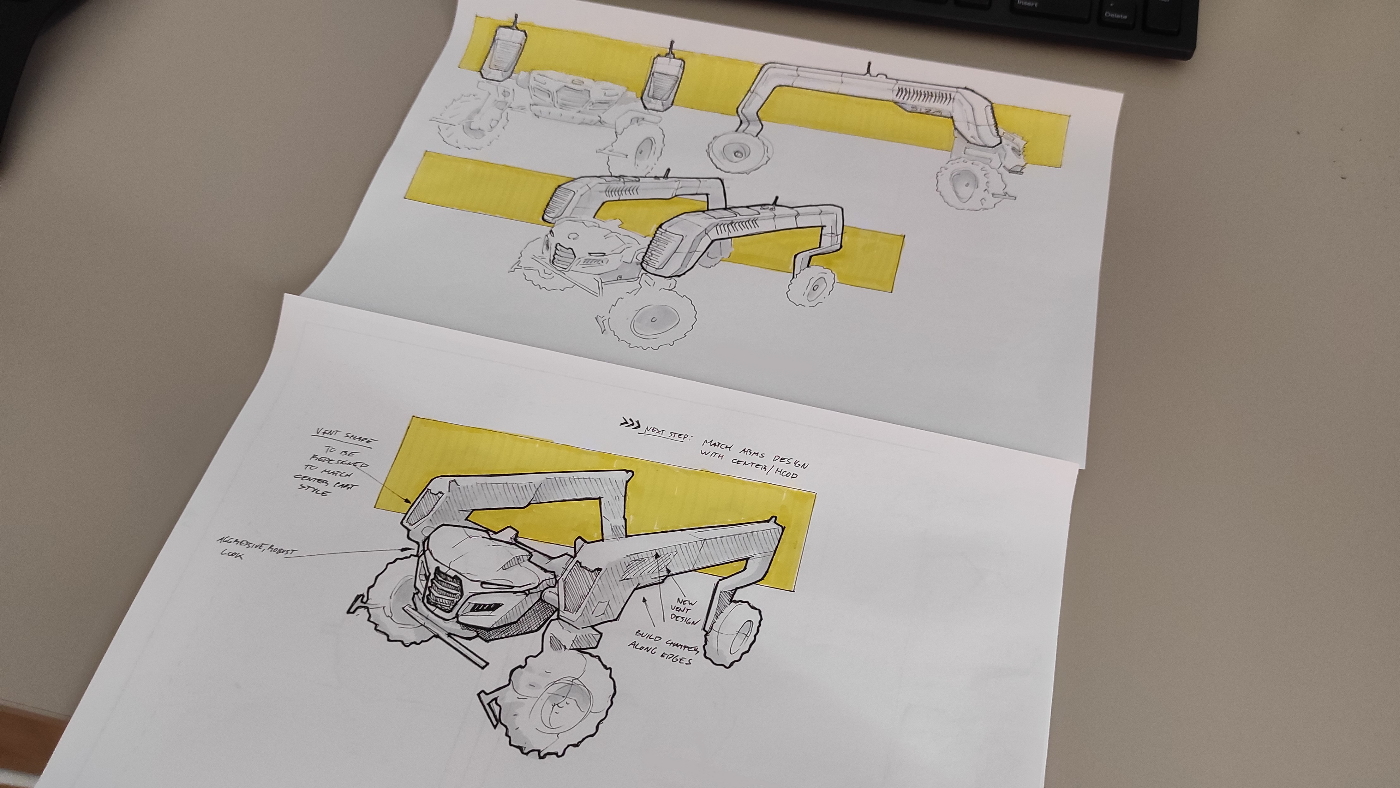
- Study: preliminary sizing, architecture sketches, consultation with component manufacturers.
- Findings: report and presentation to your decision-makers.
- Decision: launch the next phase, adjust the requirements or stop.
Reference · TOOGO
TOOGO: series cost factored in from the architecture stage
On TOOGO, unit cost was treated as a design constraint from the very first architecture choices. As a result, it reaches €62k in series production from 10 units, for a 3-tonne autonomous electric robot developed in under 4 years. Read the TOOGO case study.
Frequently asked questions
How long does a feasibility study take?
A few weeks, depending on the complexity of the machine and the availability of input information.
What do we receive at the end of the study?
A report and a presentation: restated requirements, compared architectures, risks, estimated development and series costs, and schedule and budget for the next phases.
Are we committed to what comes next?
No. The study is a phase in its own right: at the end, you decide whether to continue with us, continue another way or stop. The results belong to you.
Do we need complete specifications to get started?
No. A few lines describing the need are enough for a first call; formalizing the specifications is part of the work.
Is the study confidential?
Yes: a non-disclosure agreement is signed from the first call.
Let's talk about your project.
A first 30-minute call with a technical lead, with no commitment.